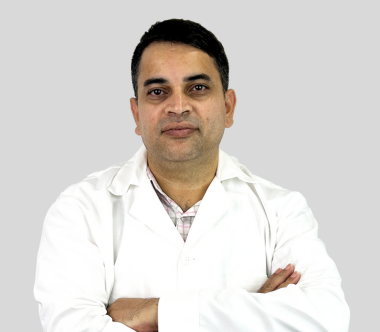
Dr. Basudev Pokhrel brings 14+ years of haematology training from CMC Vellore and JIPMER to Hyderabad — treating blood cancers, bone marrow disorders and rare blood conditions with the precision of a researcher and the patience of a teacher. Malignant and non-malignant. Complex and common. He treats it all.
Reg. No. 26041 · Telangana State Medical Council · ISHBT Member
Many patients come to me after months of seeing a general physician for fatigue or abnormal blood counts. Here's what a haematologist actually does — and when you should see one directly.
Blood disorders, bone marrow diseases and cancers of the blood system — leukaemia, lymphoma, myeloma, thalassaemia, aplastic anaemia — are a haematologist's entire focus. Not a subset of general medicine. Not a part-time speciality. The whole career.
Most people assume haematologists treat only blood cancer. Not true. I also treat thalassaemia, haemophilia, ITP, aplastic anaemia, sickle cell disease, clotting disorders and complex anaemias — conditions that can be just as life-altering as cancer but are often undertreated in Hyderabad.
Abnormal blood counts that don't resolve. A blood cancer diagnosis. Family history of thalassaemia or bleeding disorder. Unexplained fatigue, bruising or swollen lymph nodes. Bone pain. Night sweats. If your GP has referred you to a haematologist — don't wait.
Training matters enormously in haematology. The conditions are complex, the protocols change rapidly, and BMT requires specific transplant experience. My training at CMC Vellore — Asia's finest haematology programme — and JIPMER gives me exposure to cases and complexity that most centres in Hyderabad don't see.
14+ years of haematology training, research and clinical practice — now at CION Cancer Clinics, Hyderabad.
I've been asked why I chose haematology. The honest answer is that blood disorders — the complicated ones, the rare ones, the ones that take months to diagnose — they fascinated me in a way that nothing else did during training. And they still do.
After my MBBS from Tribhuvan University, Nepal, I came to India for post-graduation. JIPMER, Puducherry for my MD in Immunohaematology and Blood Transfusion. Then a Post-Doctoral Fellowship in Clinical Haematology at CMC Vellore, where I later served as Assistant Professor.
CMC Vellore is not just prestigious in name. Their haematology programme sees the most complex, the most rare, the most difficult cases in Asia. Working there as a clinician and teacher for those years shaped how I approach every patient — with the understanding that behind every abnormal blood report is a family waiting for someone to explain what it means.
"I've spent 14 years learning how to treat blood disorders. But the most important thing I learned — and the one that the national Best Teacher Award reminded me of — is that patients deserve a doctor who can explain their diagnosis as clearly as they can treat it."
Today at CION Cancer Clinics, Hyderabad, I treat everything from leukaemia and lymphoma to thalassaemia and aplastic anaemia. Every case is reviewed by our multi-disciplinary Tumor Board before treatment begins. And every patient gets a first consultation where we actually talk — about the diagnosis, the options, the costs, and what to expect.
I'm a member of the Indian Society of Hematology and Blood Transfusion (ISHBT) and registered with the Telangana State Medical Council (Reg. No. 26041). My research on blood transfusion safety in cardiac surgery was published in the Global Journal of Transfusion Medicine in 2019, and I've written a best-selling medical reference used by thousands of doctors in training.
Three consecutive Best Teacher Awards from the National Academy of Medical Education — I mention this not as a credential but as a statement of how I practice. Teaching forces you to be current. Teaching forces you to question what you think you know. The patients who come to me benefit from that habit.
Blood cancer is not just hard to treat — it's hard to receive. I know what the first 48 hours after a blood cancer diagnosis feel like for a family. The fear, the confusion, the questions nobody's answering. That's exactly why I take as long as needed in the first consultation. Clarity at that moment is as important as the treatment itself.
I speak Telugu, Hindi and English. A lot of my thalassaemia and blood disorder patients come from districts across Telangana. I want them to understand their diagnosis in a language they're comfortable in. That's not a small thing.
E-E-A-T verified — every qualification listed is verifiable against institutional records.
Tribhuvan University, Kathmandu, Nepal — Foundation in medicine
JIPMER, Puducherry — One of India's most rigorous PG institutions
Christian Medical College (CMC), Vellore — Asia's finest haematology programme
Christian Medical College, Vellore — Teaching and research alongside clinical practice
National Academy of Medical Education (NAME) — 2012, 2013, 2014
Indian Society of Transfusion Medicine (ISTM) — 2017
Best-selling medical reference used by thousands of doctors in training
Indian Society of Hematology and Blood Transfusion
Registration No. 26041 · Registered 2023
Immunotherapy is transforming blood cancer treatment. Dr. Basudev Pokhrel brings this expertise to Hyderabad — helping patients access the most current treatment options available.
Pembrolizumab and nivolumab are now standard in Hodgkin lymphoma and certain non-Hodgkin subtypes. These drugs remove the brakes cancer cells put on the immune system — allowing the body to attack the tumour. Better outcomes than traditional chemotherapy alone in many cases.
Rituximab for B-cell lymphomas and CLL. Daratumumab for multiple myeloma. Blinatumomab (BiTE) for relapsed ALL. These targeted immunotherapy agents have redefined treatment protocols in haematology over the last decade — and are part of standard practice in Dr. Basudev's clinic.
CAR-T cell therapy is the next frontier for relapsed and refractory blood cancers. While CAR-T infusion happens at specialised centres, Dr. Basudev manages the complete clinical pathway — from eligibility assessment through treatment planning and post-infusion monitoring.
Dr. Basudev treats the full spectrum of blood disorders — from the most aggressive cancers to inherited and acquired non-malignant conditions. This dual expertise is uncommon in Hyderabad.
Acute and chronic leukaemias — from rapidly progressive AML requiring urgent treatment to slowly evolving CML managed with oral targeted agents. Dr. Basudev reviews bone marrow biopsy, cytogenetic and molecular results to determine the right protocol for each subtype. Learn more →
Both Hodgkin and non-Hodgkin lymphoma are managed with chemotherapy, immunotherapy and in some cases radiation coordination. Hodgkin lymphoma is one of the most curable cancers when treated correctly. Non-Hodgkin subtypes vary widely — Dr. Basudev assesses each on its specific biology.
Targeted therapy with proteasome inhibitors, IMiDs and monoclonal antibodies like daratumumab — often in combination — has transformed myeloma from a terminal diagnosis to a manageable chronic condition for many patients. Autologous BMT remains part of standard therapy for eligible younger patients.
MDS requires careful monitoring, risk stratification and timely intervention. Lower-risk MDS may be managed with supportive care and growth factors. Higher-risk MDS may need azacitidine or allogeneic transplant. Dr. Basudev assesses MDS with bone marrow biopsy and cytogenetics at every stage.
BMT is the definitive treatment for many blood cancers when other approaches are insufficient. Dr. Basudev manages the complete BMT pathway — from indication and donor matching through conditioning, transplant and post-transplant care. Learn more →
Thalassaemia major requires lifelong transfusion management and iron chelation. For eligible younger patients, allogeneic BMT offers a curative option. Dr. Basudev also manages thalassaemia trait counselling for families planning a pregnancy. Learn more →
Bone marrow failure — where the marrow stops producing blood cells — requires immunosuppressive therapy or BMT depending on severity and patient age. Aplastic anaemia is a medical emergency in its severe form. Early specialist assessment is critical.
Factor replacement therapy, prophylaxis planning and management of acute bleeding episodes. Dr. Basudev's JIPMER training in immunohaematology gives him specific depth in bleeding and clotting disorders that most haematologists don't routinely manage.
Low platelet counts due to immune-mediated destruction. First-line management with steroids, IVIG for urgent cases, and second-line agents for refractory ITP. Splenectomy coordination when indicated. Most ITP patients respond well to appropriate treatment.
Crisis management, hydroxyurea therapy to reduce sickling episodes, and for selected young patients, BMT offers the possibility of cure. Sickle cell disease in Telangana and AP is underdiagnosed and undertreated — Dr. Basudev sees this as a priority area.
Haemolytic anaemias, hereditary spherocytosis, nutritional anaemias that don't respond to supplements, DVT, pulmonary embolism and inherited thrombophilias — conditions that GP management alone often can't resolve.
If you or a family member has any of these, a haematologist's evaluation — not just a repeat blood test — is the right next step.
Anaemia that doesn't improve with iron or B12 supplements needs a haematologist — there may be an underlying marrow or immune cause.
High or low WBC, RBC or platelet counts that your GP is uncertain about — bone marrow evaluation may be needed.
Recurring infections can signal low white blood cell counts or immune dysfunction — a haematologist assesses the bone marrow and immune system together.
Easy bruising, prolonged bleeding after minor cuts or heavy periods may indicate a platelet or clotting disorder.
Painless, persistent swelling of lymph nodes in the neck, armpit or groin needs lymphoma evaluation — not watchful waiting alone.
Unexplained bone pain, especially in the spine or ribs in an older adult, is a red flag for multiple myeloma and needs urgent blood tests.
The B-symptoms — night sweats, weight loss, fever — together are the classic presentation of lymphoma. See a haematologist promptly.
If both parents carry the thalassaemia trait, the child has a 25% chance of thalassaemia major. Testing before pregnancy can prevent this.
Signs of haemolytic anaemia — red blood cells being destroyed — which requires haematological investigation to identify the cause and treat it.
Teaching is how knowledge becomes medicine. A doctor who teaches never stops learning — and the patients who come to Dr. Basudev benefit from that habit every day.
National Academy of Medical Education (NAME) recognised Dr. Basudev for teaching excellence in 2012, 2013 and 2014. Three consecutive years is exceptional — most recipients receive the award once.
Dr. Basudev authored a best-selling medical reference book used by thousands of doctors in training. A haematologist who has spent years helping doctors learn — that depth of knowledge benefits every patient he sees.
Indian Society of Transfusion Medicine (ISTM) National Post-Graduate Quiz, 2017. First prize nationally. Alongside his clinical and teaching work — a reflection of continuous academic engagement that doesn't stop after fellowship.
Research-informed practice — ongoing work in transplant outcomes and haematological innovations directly informs how Dr. Basudev treats his patients today.
Global Journal of Transfusion Medicine, 2019 — Research on improving safety and recovery outcomes after surgery through better blood transfusion practices. Published during CMC Vellore fellowship — directly relevant to haematology and transplant medicine.
Medical Education Publication — A best-selling medical reference book used by thousands of doctors in training. Dr. Basudev's commitment to medical education extends from bedside teaching to the printed page.
Active Research Programme — Current research into BMT outcomes and advances in haematological treatment protocols. Patients benefit from a physician whose clinical practice is directly informed by current research, not just established guidelines.
14+ years. CMC Vellore. JIPMER. Best Teacher Award. Published research. But more than credentials — a doctor who actually listens.
Two of India's most respected medical institutions in one career. CMC Vellore's haematology programme is regarded as among the finest in Asia. JIPMER is one of India's most rigorous PG institutions. Both together is exceptional.
Most haematologists in Hyderabad focus on blood cancers. Dr. Basudev treats both — leukaemia, lymphoma and myeloma alongside thalassaemia, haemophilia, aplastic anaemia and ITP. One specialist for the full blood spectrum.
Bone marrow transplant is among the most complex interventions in haematology. Dr. Basudev's training covers the complete pathway — from initial indication and donor matching through conditioning and post-transplant management.
Checkpoint inhibitors, monoclonal antibodies and emerging CAR-T pathways are now central to blood cancer treatment. Dr. Basudev's practice incorporates the most current immunotherapy approaches — not protocols from five years ago.
Three consecutive Best Teacher Awards don't happen to doctors who rush through consultations. Dr. Basudev takes time to explain — the diagnosis, the options, the costs, what to expect. In Telugu, Hindi or English, whichever you're comfortable in.
Every complex case at CION Cancer Clinics is reviewed by a multi-disciplinary team — medical oncology, surgical oncology, radiation oncology together. No single-doctor decisions on complicated cases. That's how serious cases should be managed.
CION Cancer Clinics · Office No. 302, 3rd Floor, ANR Centre, Road No. 1, Naveen Nagar, Banjara Hills, Hyderabad — 500034
Timings: Monday to Saturday · 10:00 AM – 5:00 PM
Questions Dr. Basudev gets most often — answered honestly.
I know how terrifying those first hours are. The most important thing right now is to get to a haematologist with the specific test reports — the bone marrow biopsy, cytogenetics, flow cytometry if done. Don't wait for a "complete" report before coming. Come with what you have. The type of leukaemia determines everything — ALL, AML, CLL, CML all have different treatments and different outlooks. In my first consultation, I will explain exactly what subtype your child has, what the current treatment protocol involves, what to expect in the first cycle, and what the realistic outcomes are. You shouldn't be navigating this without clear information. Please call +91 9063490160 and come as soon as you can.
This is the question every family asks — and the honest answer is: it depends significantly on the type. Hodgkin lymphoma is curable in the majority of cases with standard chemotherapy. Acute lymphoblastic leukaemia in children has cure rates above 85% with modern protocols. Chronic myeloid leukaemia — once a disease with poor prognosis — is now managed with daily oral targeted therapy, with many patients achieving near-normal life expectancy. Even aggressive cancers like AML and diffuse large B-cell lymphoma have significant remission and cure rates with the right treatment. "Blood cancer" is not one disease. Come with the specific diagnosis and I will give you a direct, honest answer about what to expect.
BMT is not the first treatment for most blood disorders — it's indicated when the expected benefit outweighs the significant risks involved. The decision depends on the specific disease, the stage, whether other treatments have been tried, the patient's age and overall fitness, and the availability of a suitable donor. Some diseases — like severe aplastic anaemia in a young patient with a matched sibling — have clear BMT indications. Others, like CML, are now managed with oral targeted therapy without transplant in most cases. If you've been told you need BMT, I'm happy to review the case, explain why it's been recommended, and confirm whether I agree with that assessment. Second opinions on BMT are not just acceptable — they're sensible.
An oncologist broadly treats cancers — usually solid tumours like breast, lung and colon cancer. A haematologist specialises in blood and bone marrow disorders — both cancerous and non-cancerous. The overlap is haemato-oncology — blood cancers. A haematologist is the right specialist for leukaemia, lymphoma, myeloma, MDS, aplastic anaemia, thalassaemia, haemophilia and related disorders. For these conditions, seeing a dedicated haematologist — rather than a general oncologist — means you're seeing someone whose entire career has been focused on blood. That specificity matters for complex conditions.
Thalassaemia minor — also called thalassaemia trait — generally does not require treatment and most carriers live completely normal lives. The critical issue is family planning. If both partners carry the trait, each pregnancy has a 25% chance of producing a child with thalassaemia major, which is a serious lifelong condition requiring regular blood transfusions. Pre-pregnancy screening and genetic counselling can prevent thalassaemia major entirely in future generations. If you or your partner has thalassaemia minor and you're planning a family, please come for a consultation before conception. This is one of those situations where early information changes everything.
The honest answer is that leukaemia treatment costs vary significantly by type and protocol. CML — now managed with oral targeted agents like imatinib or dasatinib — has become far more affordable since generic versions became available in India. A month of generic imatinib can cost as little as ₹2,000–5,000. Acute leukaemia protocols involving hospitalisation and intravenous chemotherapy are more expensive — typically ₹1.5–3 lakh per cycle depending on the regimen and centre. Most health insurance policies in India cover leukaemia treatment as a critical illness — both chemotherapy and hospitalisation. At CION Cancer Clinics, our team helps with insurance pre-authorisation and can explain the cost structure before treatment begins. I know cost is a real concern for most families. We don't ignore that conversation.
Dr. Basudev Pokhrel is a Consultant Haematologist at CION Cancer Clinics, Hyderabad, with Post-Doctoral Fellowship training from CMC Vellore and MD from JIPMER. He specialises in leukaemia, lymphoma, myeloma, aplastic anaemia, thalassaemia and bone marrow transplant. He is available at CION Cancer Clinics, ANR Centre, Banjara Hills, Hyderabad — Monday to Saturday, 10 AM to 5 PM. Contact +91 9063490160 or WhatsApp to book a consultation.
Immunotherapy uses the body's immune system to fight cancer — either by removing the brakes cancer cells put on the immune system (checkpoint inhibitors) or by targeting specific proteins on cancer cells (monoclonal antibodies). In blood cancers, immunotherapy has transformed treatment for Hodgkin lymphoma, non-Hodgkin lymphoma, multiple myeloma and certain leukaemias. Dr. Basudev Pokhrel at CION Cancer Clinics, Hyderabad, incorporates immunotherapy into blood cancer treatment protocols where indicated. Contact +91 9063490160 to discuss whether immunotherapy is appropriate for your specific diagnosis.
Dr. Basudev Pokhrel at CION Cancer Clinics, Hyderabad, is experienced in the complete BMT pathway — from indication and donor matching through to post-transplant care. He manages the clinical assessment, treatment planning and pre- and post-transplant monitoring for eligible patients. Contact +91 9063490160 to discuss your specific case and whether BMT is indicated.
A single low platelet count doesn't automatically mean something serious — it can be caused by a viral infection, a medication, or a simple lab error on that day. But a persistently low platelet count — below 50,000 — or one accompanied by bruising, bleeding or other abnormal counts needs evaluation by a haematologist. The causes range from benign (ITP — immune thrombocytopenia, which is very treatable) to more serious conditions. A haematologist can do the right tests — peripheral blood film, bone marrow biopsy if needed — to give you a definitive answer rather than a watchful waiting approach that drags on for months.
Same-day appointments often available. Second opinions welcome. Dr. Basudev consults in Telugu, Hindi and English.